
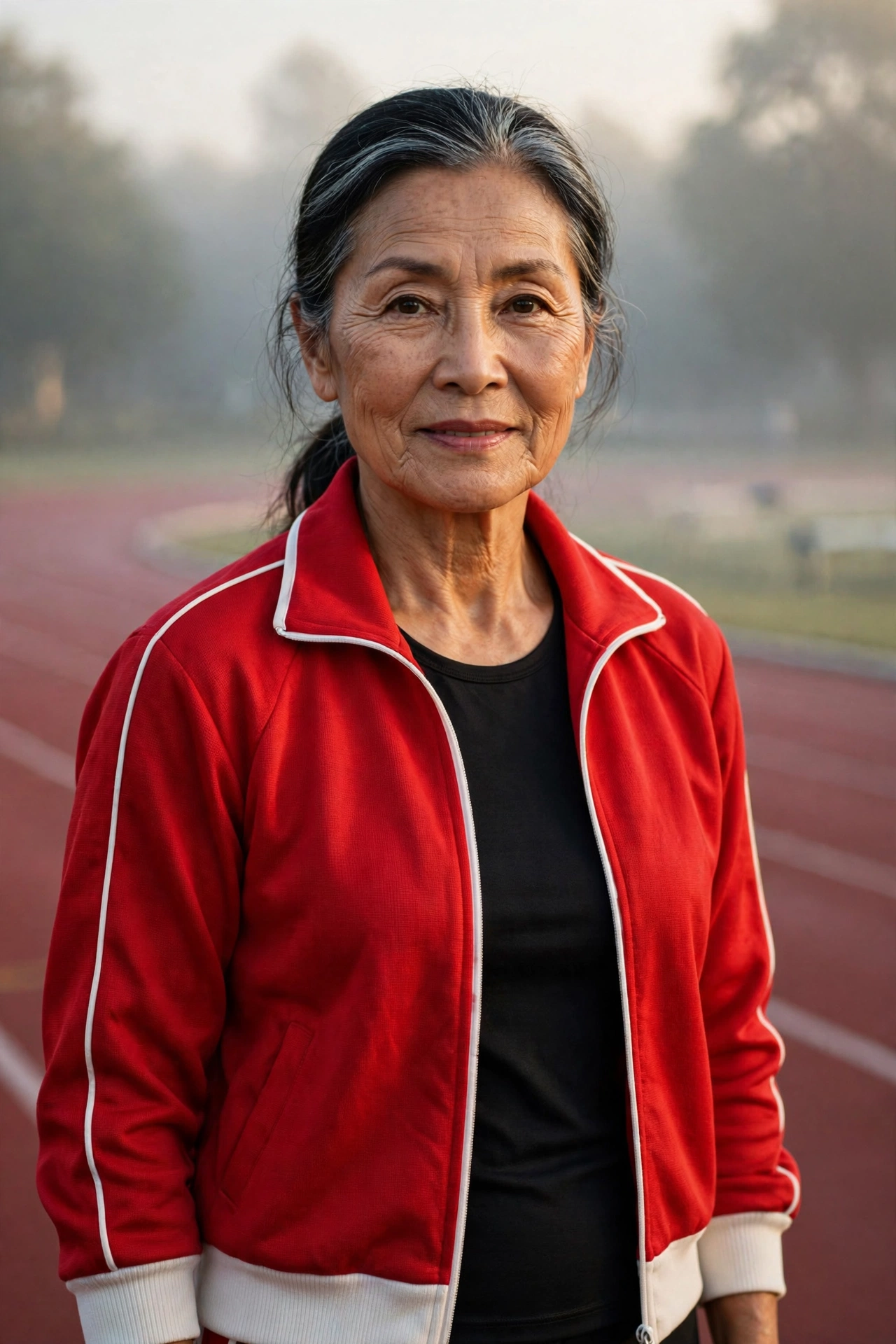
Thelma Wright is a Canadian former middle-distance runner whose career placed her at the heart of one of the most important eras in women’s athletics. A two-time Olympian and a two-time Commonwealth Games bronze medallist at 1,500 metres, she competed at a time when women’s distance events were still fighting for a place on the programme — and when her own greatest talent, cross-country running, had barely a championship to call its own. Long before women’s running became the global phenomenon it is today, Wright was one of the Canadians who, in the words of a later generation of journalists, “dared to break through.”
Born on 9 October 1951, Wright made her international breakthrough under her maiden name, Thelma Fynn, winning bronze in the 1,500 metres at the 1970 British Commonwealth Games in Edinburgh. Over the next decade she represented Canada at the Olympic Games in Munich (1972) and Montreal (1976), added a second Commonwealth bronze in Christchurch (1974), and — in a remarkable postscript — came out of supposed retirement in 1977 to lead the Canadian cross-country team once more. In this biography, we take a detailed look at Thelma Wright’s wiki-style profile: her age, career journey, personal life, and estimated net worth in 2026.
Thelma Wright Wiki and Biography
| Full Name | Thelma Wright (née Fynn) |
| Date of Birth | 9 October 1951 |
| Age | 75 years old (as of October 2026) |
| Birthplace | Reported as Eastbourne; represented Canada internationally |
| Nationality | Canadian |
| Ethnicity | Not publicly disclosed |
| Zodiac Sign | Libra |
| Profession | Former middle-distance and cross-country runner |
| Years Active | Late 1960s – late 1970s (competitive career) |
| Boyfriend / Marital Status | Not publicly disclosed |
Thelma Wright Height, Weight and Body Measurements
| Height | Not publicly documented |
| Weight | Not publicly documented |
| Body Measurements | Not publicly documented |
| Eye Color | Not publicly documented |
| Hair Color | Not publicly documented |
| Shoe Size | Not publicly documented |
| Distinctive Features | Lean distance-runner’s build; competitive era predates published athlete biometrics |
Thelma Wright Career
| Profession | Middle-distance runner, cross-country runner |
| Career Started | Late 1960s (junior competition) |
| Known For | Two Commonwealth Games 1,500m bronze medals (1970, 1974); two Olympic appearances (1972, 1976) |
| Platforms | Track (800m / 1,500m), cross-country |
| Career Milestones | 1970 Commonwealth bronze (Edinburgh); 1972 Munich Olympics; 1974 Commonwealth bronze (Christchurch); 1976 Montreal Olympics; 1977 cross-country comeback |
Thelma Wright’s competitive career began in the late 1960s, a period when women’s middle-distance running was still regarded with suspicion by much of the athletics establishment. The women’s 1,500 metres had only been added to the Olympic programme at Munich in 1972 — the same Games at which Wright made her Olympic debut — and events like the 5,000 metres and the marathon were still considered off-limits to women by the sport’s governing bodies. Wright raced in an era when ambition itself was a form of protest.
Her breakthrough arrived in July 1970 at the British Commonwealth Games in Edinburgh. Competing as Thelma Fynn in the first-ever women’s 1,500 metres held at the Games, she finished third in 4:19.1, taking bronze behind England’s Rita Ridley and Joan Page in a race decided by two-tenths of a second — the narrowest winning margin in the event’s Commonwealth history at the time. She was 18 years old.
Two years later, Wright earned selection for the 1972 Munich Olympics, where she contested the inaugural Olympic women’s 1,500 metres. She returned to the Commonwealth stage in Christchurch in 1974 and won a second 1,500m bronze, confirming her place among the world’s most consistent middle-distance runners of the mid-1970s. Her second Olympic appearance came on home soil at the 1976 Montreal Games.
What made Wright distinctive, however, was cross-country. In an era when Canadian women trained through harsh winters — she later recalled having to race indoor track in the winter months in Vancouver — Wright was the backbone of the national cross-country squad. After supposedly retiring from international competition, she answered the call in 1977 and led the Canadian team at that year’s world championship, a final flourish that underlined where her true passion lay. “My calling was cross-country,” she said in a later interview. “I always said, ‘I wish the race were longer.'” In 1980 she was still being asked about the future of the sport, and she told interviewers she hoped to see the 5,000 metres and even the half-marathon opened to women — distances that would, within a few years, become standard.
Thelma Wright Net Worth
| Net Worth | Not publicly documented |
| Income Sources | Athletic career (amateur era, 1960s–1970s); post-athletics career not publicly documented |
No reliable public record of Thelma Wright’s net worth exists. A handful of low-reliability celebrity net-worth aggregators suggest a figure in the low millions, but these estimates are unverified, unsourced, and should be treated with caution. It is worth remembering that Wright competed entirely in the amateur era, when Olympic and Commonwealth athletes could not earn prize money or endorsements from their sport. Any published “net worth” number for her is speculative rather than factual.
10 Interesting Facts About Thelma Wright
- Thelma Wright won her first Commonwealth Games medal at age 18, finishing third in the inaugural women’s 1,500 metres at Edinburgh 1970.
- She competed under her maiden name, Thelma Fynn, at the 1970 Games — the results list her as “Thelma Fynn, Canada.”
- The 1970 Commonwealth 1,500m final was decided by just 0.2 seconds between gold and bronze, one of the closest finishes in the event’s history.
- She raced in the first-ever Olympic women’s 1,500 metres at the Munich 1972 Games.
- Her second Commonwealth bronze came four years later at Christchurch 1974 — a rare feat of longevity at the top of middle-distance running.
- She represented Canada at two Olympic Games: Munich 1972 and Montreal 1976.
- After announcing her retirement, she made a comeback in 1977 to lead the Canadian cross-country team at the world championships.
- She trained through Canadian winters by racing indoor track — a necessity of the era she later described with characteristic dryness.
- In a 1980 interview she advocated for women to be allowed to race the 5,000 metres and the half-marathon, years before those events became standard.
- Her career is documented in the archives of the University of British Columbia, which holds a 1974 track photograph of her in its sports collection.
Conclusion
Thelma Wright’s career is best measured not in medals alone — though two Commonwealth bronzes and two Olympic appearances are honours few athletes ever achieve — but in what she represented. She raced at a moment when the women’s 1,500 metres was brand new to the Olympics and the marathon was still considered beyond women’s capabilities, and she spent her career arguing, by example, that the distances should be longer. A pioneer of Canadian women’s running, her legacy lives on in every women’s championship race that goes further than a mile.
FAQs About Thelma Wright
Q: Who is Thelma Wright?
A: Thelma Wright is a Canadian former middle-distance and cross-country runner, a two-time Olympian (1972, 1976) and two-time Commonwealth Games bronze medallist in the 1,500 metres (1970, 1974).
Q: What is Thelma Wright’s real name?
A: She was born Thelma Fynn and competed under that name early in her career, including at the 1970 Commonwealth Games, before taking the name Wright.
Q: How old is Thelma Wright?
A: She was born on 9 October 1951, which makes her 75 years old as of October 2026.
Q: What is Thelma Wright’s height and weight?
A: Her height and weight have not been publicly documented. Athlete biometrics were rarely published during her competitive era in the 1960s and 1970s.
Q: What is Thelma Wright known for?
A: She is known for winning Commonwealth Games bronze medals in the 1,500 metres at Edinburgh 1970 and Christchurch 1974, and for representing Canada at the Munich 1972 and Montreal 1976 Olympic Games.
Q: Where is Thelma Wright from?
A: She is Canadian and represented Canada internationally. Some biographical sources report her birthplace as Eastbourne; she trained and raced in Vancouver, British Columbia.
Q: Did Thelma Wright compete in the Olympics?
A: Yes — she was an Olympian twice, competing in the women’s 1,500 metres at Munich 1972 and Montreal 1976.
Q: What is Thelma Wright’s net worth?
A: There is no reliable public record of her net worth. Unverified aggregator estimates exist but should be treated as speculative; she competed entirely in the amateur era.
Q: Is Thelma Wright married, or does she have a boyfriend?
A: Her marital and relationship status is not publicly documented.
Q: What did Thelma Wright say about women’s distance running?
A: In a 1980 interview she said her “calling was cross-country” and expressed a wish that women could race longer distances, advocating for the 5,000 metres and the half-marathon for women.
Last Updated: October 2026 | Fact-checked by the Xposed editorial team.