
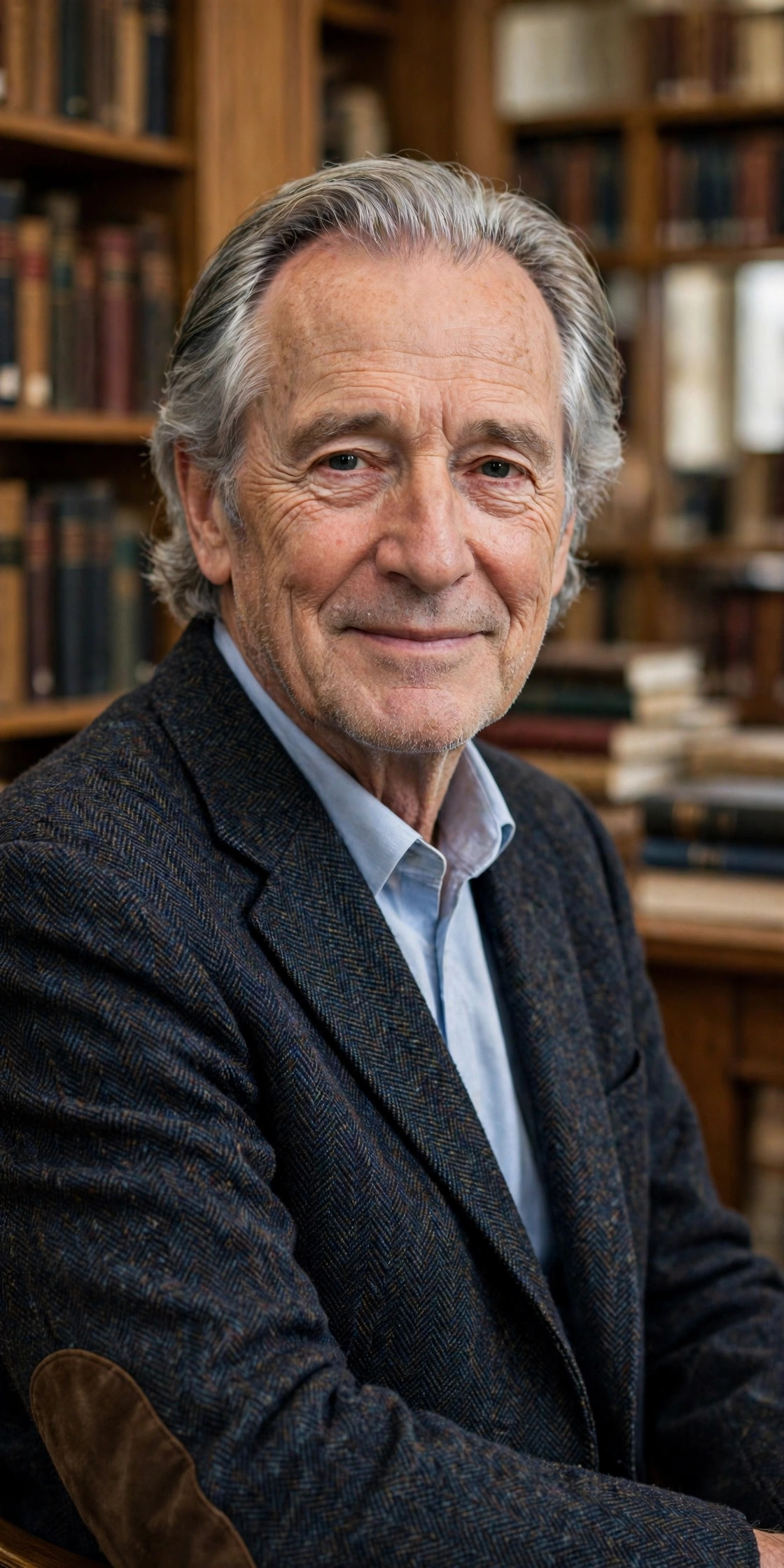
Ryszard Słomski is widely considered one of the founding figures of modern genetics in Poland — a scientist whose work brought DNA testing into Polish courtrooms, hospitals, and research laboratories. In a career spanning more than five decades, he carried out the country’s first DNA fingerprinting studies (1987), its first DNA amplification by PCR (1989), and founded Poland’s first private laboratory performing DNA tests for forensic medical purposes.
Born on 21 January 1950 in Poznań, Poland, Słomski trained as a biologist at Adam Mickiewicz University before moving into medicine and human genetics. From 1974 he worked under Professor Antoni Horst at the newly established Institute of Human Genetics of the Polish Academy of Sciences, and he has been its deputy director for scientific affairs since 1986. Alongside that role, he built a second academic home at the Poznań University of Life Sciences, where he has headed the Department of Biochemistry and Biotechnology since 1997.
This complete biography covers everything about Ryszard Slomski — his wiki, age, height, weight, academic career, pioneering research, personal life, net worth, and ten interesting facts about one of Poland’s most decorated geneticists.
Ryszard Slomski Wiki and Biography
| Attribute | Details |
| Full Name | Ryszard Słomski (pronounced [ˈrɨ.ʂart slɔmski]) |
| Date of Birth | January 21, 1950 |
| Age (as of 2026) | 76 years (turns 77 on January 21, 2027) |
| Birthplace | Poznań, Poland |
| Nationality | Polish |
| Ethnicity | Not publicly disclosed |
| Zodiac Sign | Aquarius |
| Profession | Professor of human genetics; lecturer at the Poznań University of Life Sciences |
| Years Active | 1974–present |
| Relationship Status | Not publicly disclosed |
Ryszard Slomski Height, Weight and Physical Appearance
Ryszard Slomski is a scholar who has spent his life in laboratories and lecture halls rather than in the public spotlight, so his physical details are not part of the public record. No reliable source lists his height, weight, or other measurements. What is documented is the portrait of a distinguished senior academic: now in his mid-seventies, he appears in university photographs as a silver-haired professor, typically photographed in academic settings alongside the research teams he has led for decades.
| Attribute | Details |
| Height | Not publicly disclosed |
| Weight | Not publicly disclosed |
| Body Measurements | Not publicly disclosed |
| Eye Color | Not publicly disclosed |
| Hair Color | Silver/gray (as seen in recent university photographs) |
| Shoe Size | Not publicly disclosed |
| Distinctive Features | Distinguished senior academic appearance, typically seen in university and laboratory settings |
Ryszard Slomski Career
Słomski’s scientific path began in his native Poznań. He completed his secondary education at the Karol Marcinkowski Secondary School — known locally as “Marcinek” — and in 1973 graduated in biology from the Faculty of Biology and Earth Sciences at Adam Mickiewicz University. He then undertook PhD studies at the Poznań University of Medical Sciences, and in 1974 he joined the newly opened Institute of Human Genetics of the Polish Academy of Sciences, where he worked under Professor Antoni Horst, one of the pioneers of Polish human genetics.
His academic ascent was steady and well documented. He earned his doctorate in medical sciences in 1976, his postdoctoral degree (habilitation) in 1982 at the Poznań University of Medical Sciences, his professorial degree in 1990, and the title of full professor in 2000. Since 1986 he has served as deputy director for scientific affairs at the Institute of Human Genetics of the Polish Academy of Sciences. In 1992 he joined the Department of Biochemistry and Biotechnology of the Agricultural Academy in Poznań — today the Poznań University of Life Sciences — and has headed that department since 1997. He is also an active staff member of the NanoBioMedical Centre of Adam Mickiewicz University.
His scientific record is defined by a series of Polish firsts. In 1987 he carried out the first DNA fingerprinting studies in Poland; in 1989 he performed the country’s first DNA amplification by PCR. In 1992 he set up the Laboratory of Molecular Genetics — the first private laboratory in Poland conducting DNA tests for forensic medical purposes, bringing genetic evidence into the Polish legal system. His research interests span molecular diagnostics of genetic diseases, the description of new human genes, biotechnology, forensic medical tests, and studies on fossil DNA. Internationally, he trained at the La Rabida Children Hospital at the University of Chicago (1978), the Department of Microbiology and Immunology at the University of Illinois at Chicago (repeatedly since 1979), the Institute of Human Genetics at the University of Göttingen as a Humboldt Foundation fellow (1990–91), the Division of Experimental Medicine at Harvard Medical School in Boston (1996–97), the PienGen Biomedical Corporation in Knoxville (from 1998), and the Max Delbrück Centre for Molecular Medicine, Gene Mapping Centre, in Berlin-Buch (2002). He also serves as an expert witness in the field of human genetics and as a specialist in laboratory genetics.
| Attribute | Details |
| Profession | Professor of human genetics; lecturer; deputy director for scientific affairs; expert witness in human genetics; specialist in laboratory genetics |
| Career Started | 1974 (joined the Institute of Human Genetics, Polish Academy of Sciences, under Professor Antoni Horst) |
| Known For | First DNA fingerprinting studies in Poland (1987); first DNA amplification by PCR in Poland (1989); founder of Poland’s first private forensic DNA laboratory (1992) |
| Institutions/Platforms | Institute of Human Genetics, Polish Academy of Sciences; Poznań University of Life Sciences (head of the Department of Biochemistry and Biotechnology since 1997); NanoBioMedical Centre, Adam Mickiewicz University |
| Notable Milestones | Doctorate 1976; habilitation 1982; professorial degree 1990; full professor 2000; Laboratory of Molecular Genetics founded 1992; Humboldt Foundation fellow in Göttingen 1990–91; research stays at the University of Chicago, Harvard Medical School, and the Max Delbrück Centre |
Ryszard Slomski Net Worth
Ryszard Slomski’s net worth has not been disclosed in any public source, and no financial outlet has published an estimate. Unlike public figures in entertainment or business, senior academic researchers rarely have their wealth assessed publicly, and Słomski is no exception — so no reliable figure exists.
His income has come from the standard sources of a senior Polish academic: university and academy salaries across his long career, research grants funding his work in genetics and biotechnology, and professional work as an expert witness in human genetics and a specialist in laboratory genetics. Any private estimate circulating online should be treated as speculation.
| Attribute | Details |
| Net Worth (estimated) | Not publicly disclosed — no verified figure exists |
| Income Sources | Academic salaries (Polish Academy of Sciences, Poznań University of Life Sciences), research grants, expert-witness work, specialist laboratory genetics services |
10 Interesting Facts About Ryszard Slomski
- He was born on January 21, 1950, in Poznań, Poland, where he has spent nearly his entire career.
- His full name is Ryszard Słomski, pronounced [ˈrɨ.ʂart slɔmski] in Polish.
- He completed secondary school at the Karol Marcinkowski Secondary School in Poznań, nicknamed “Marcinek.”
- In 1973 he graduated in biology from the Faculty of Biology and Earth Sciences at Adam Mickiewicz University.
- In 1974 he joined the newly opened Institute of Human Genetics of the Polish Academy of Sciences, working under Professor Antoni Horst.
- He performed Poland’s first DNA fingerprinting studies in 1987 — a landmark for Polish forensic science.
- He carried out Poland’s first DNA amplification by PCR in 1989, introducing the technique to Polish laboratories.
- In 1992 he founded the Laboratory of Molecular Genetics, the first private laboratory in Poland doing DNA tests for forensic medical purposes.
- He has been deputy director for scientific affairs at the Institute of Human Genetics of the Polish Academy of Sciences since 1986.
- His research also reaches into the distant past: he studies fossil DNA alongside modern molecular diagnostics.
Conclusion
Few scientists can claim to have introduced an entire field of evidence to their country’s courts and clinics, but that is precisely what Ryszard Slomski did. From the first Polish DNA fingerprint in 1987 to the first private forensic DNA laboratory in 1992, he turned genetics from an academic discipline into a practical tool for justice and medicine. Five decades on — with international training from Chicago to Göttingen, Boston to Berlin — he remains at the heart of Polish human genetics as a professor, department head, and expert witness. At 76, his legacy is written not only in papers and protocols, but in every DNA test that has followed the path he opened.
FAQs About Ryszard Slomski
Q: Who is Ryszard Slomski?
A: Ryszard Słomski is a Polish professor of human genetics, best known as a pioneer of DNA testing in Poland. He is deputy director for scientific affairs at the Institute of Human Genetics of the Polish Academy of Sciences and head of the Department of Biochemistry and Biotechnology at the Poznań University of Life Sciences.
Q: What is Ryszard Slomski’s real name?
A: His full name is Ryszard Słomski (with the Polish ł character), pronounced [ˈrɨ.ʂart slɔmski].
Q: How old is Ryszard Slomski?
A: He was born on January 21, 1950, which makes him 76 years old as of October 2026. He turns 77 on January 21, 2027.
Q: What is Ryszard Slomski’s height and weight?
A: His height and weight have not been publicly disclosed.
Q: What is Ryszard Slomski known for?
A: He is known for Poland’s first DNA fingerprinting studies (1987), its first DNA amplification by PCR (1989), and for founding the Laboratory of Molecular Genetics in 1992 — Poland’s first private laboratory conducting DNA tests for forensic medical purposes.
Q: Where does Ryszard Slomski work?
A: He works at the Institute of Human Genetics of the Polish Academy of Sciences (deputy director for scientific affairs since 1986), heads the Department of Biochemistry and Biotechnology at the Poznań University of Life Sciences (since 1997), and is also a staff member of the NanoBioMedical Centre of Adam Mickiewicz University.
Q: What is Ryszard Slomski’s net worth?
A: His net worth has not been publicly disclosed, and no verified estimate exists. His income comes from academic salaries, research grants, and expert-witness work.
Q: Is Ryszard Slomski married?
A: His relationship and marital status have not been publicly disclosed.
Q: Did Ryszard Slomski study abroad?
A: Yes — he trained at institutions including the University of Chicago, the University of Illinois at Chicago, the University of Göttingen (as a Humboldt Foundation fellow), Harvard Medical School, the PienGen Biomedical Corporation in Knoxville, and the Max Delbrück Centre in Berlin-Buch.
Q: Is Ryszard Slomski still active in research?
A: Yes. As of 2026 he continues to serve as deputy director of the Institute of Human Genetics of the Polish Academy of Sciences and as head of the Department of Biochemistry and Biotechnology at the Poznań University of Life Sciences, with research interests spanning molecular diagnostics, biotechnology, forensic testing, and fossil DNA.
Last Updated: October 2026 | Fact-checked by the Xposed editorial team.