
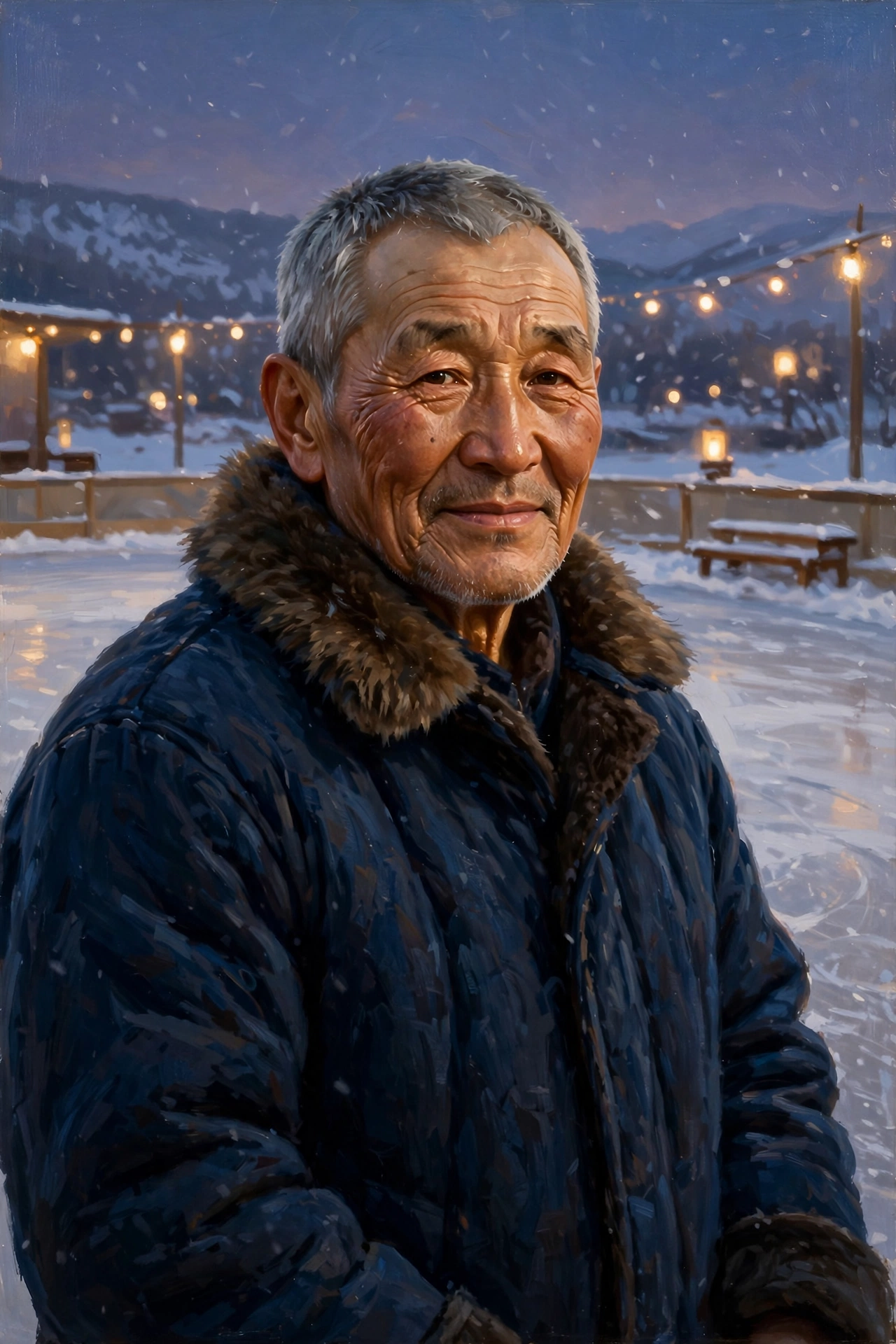
Luvsansharavyn Tsend was a Mongolian speed skater who carried his nation’s flag into three Winter Olympic opening ceremonies — a pioneer of one of the most unlikely winter sports careers in Olympic history. Born in Bulgan, Mongolia, in 1940, he began skating on saw blades tied to his shoes and rose to represent his country at Innsbruck 1964, Grenoble 1968, and Sapporo 1972, when Mongolia’s winter sports program was still in its infancy.
His story does not end at the finish line. After a 1976 bus crash led to a shocking medical discovery — he became the first person ever diagnosed with hemophilia in Mongolia — Tsend turned from athlete to mentor, spending decades coaching Mongolia’s national team and advising its skating federation. When he died on August 21, 2023, at the age of 83, he left behind a legacy as both Mongolia’s first generation of Olympic skaters and its first hemophilia patient.
This complete biography covers everything about Luvsansharavyn Tsend — his wiki, age, height, weight, skating career, coaching life, personal story, net worth, and ten interesting facts about Mongolia’s three-time Olympic flag bearer.
Luvsansharavyn Tsend Wiki and Biography
| Attribute | Details |
| Full Name | Luvsansharavyn Tsend |
| Date of Birth | July 11, 1940 |
| Date of Death | August 21, 2023 |
| Age at Death | 83 years |
| Birthplace | Bulgan, Mongolia |
| Nationality | Mongolian |
| Zodiac Sign | Cancer |
| Profession | Speed skater; later a national team coach and skating federation advisor |
| Years Active | 1964–1972 (competitive skating) |
| Relationship Status | Not publicly documented |
Luvsansharavyn Tsend Height, Weight and Physical Appearance
Luvsansharavyn Tsend’s height and weight were never published in official Olympic records or skating databases, and no reliable source documents his physical measurements. Speed skating records of the 1960s and 1970s routinely omitted athlete biometrics for skaters from smaller delegations, and Mongolia’s early Olympic teams are no exception. As a long-distance specialist, he would have had the lean, powerful build typical of endurance skaters, but no verified figures exist — any numbers circulating online should be treated as unverified.
| Attribute | Details |
| Height | Not publicly documented |
| Weight | Not publicly documented |
| Body Measurements | Not publicly disclosed |
| Eye Color | Not publicly disclosed |
| Hair Color | Gray in later years (photographs from his coaching era) |
| Shoe Size | Not publicly disclosed |
| Distinctive Features | Lean endurance-skater’s build; carried the Mongolian flag at three Olympic opening ceremonies |
Luvsansharavyn Tsend Career
Tsend’s skating career began in the most improbable way. Growing up in Mongolia — a country with virtually no skating infrastructure — he made his first pair of skates himself, strapping saw blades to his shoes. He was a late starter who took up the sport seriously at a time when Mongolia’s winter athletes had almost no access to proper rinks, coaching, or equipment. Yet by the early 1960s he had risen to become Mongolia’s leading long-track skater, winning his first Mongolian allround championship in 1964.
That same year, he was selected for Mongolia’s first-ever Olympic speed skating team at the Innsbruck 1964 Winter Games. At 23, Tsend was given the honor of carrying the Mongolian flag at the opening ceremony — the first of three times he would do so. He competed in the longer distances, his specialty, finishing 25th in the 10,000 m. Four years later at Grenoble 1968, he was once again Mongolia’s flag bearer at the opening ceremony, racing against the world’s best on the outdoor ice of the French Alps.
His final Olympic appearance came at Sapporo 1972, where the 31-year-old again led the Mongolian delegation into the stadium with the flag. This time he recorded his best-ever Olympic result: 24th place in the 10,000 m. His personal bests — 42.1 seconds over 500 m (1971), 2:14.9 over 1500 m (1971), 7:59.8 over 5000 m (1969), and 16:10.2 over 10,000 m (1970) — were set on outdoor ice and reflected the steady improvement of a self-made athlete. He won the Mongolian allround championship four times (1964, 1969, 1970, 1974).
Tsend’s competitive career came to an abrupt end after a bus crash in 1976 left him with a leg injury that bled uncontrollably. Doctors in the Soviet Union diagnosed him with Hemophilia B — making him the first person ever diagnosed with hemophilia in Mongolia. The condition ended his days on the ice, but it opened a second chapter: he became a longtime coach on Mongolia’s national team staff, appearing with the team at the Albertville 1992 Winter Olympics and at world championships as late as 2008, before serving as an advisor to the Mongolian Skating Federation.
| Attribute | Details |
| Profession | Speed skater (long-distance specialist); later national team coach and federation advisor |
| Career Started | Early 1960s (first Mongolian allround title, 1964; first international season 1962) |
| Known For | Mongolian flag bearer at three Winter Olympic opening ceremonies (1964, 1968, 1972); member of Mongolia’s first-ever Olympic speed skating team; first person diagnosed with hemophilia in Mongolia |
| Olympic Appearances | Innsbruck 1964 (25th in 10,000 m), Grenoble 1968, Sapporo 1972 (24th in 10,000 m — best Olympic result) |
| Notable Milestones | 4× Mongolian allround champion (1964, 1969, 1970, 1974); personal bests of 42.1 (500 m), 2:14.9 (1500 m), 7:59.8 (5000 m), 16:10.2 (10,000 m); coach at Albertville 1992 and world championships through 2008 |
Luvsansharavyn Tsend Net Worth
Luvsansharavyn Tsend’s net worth is not documented by any authoritative financial source. A small number of unverified biography sites place it somewhere between $1 million and $5 million, but these figures carry no corroboration from financial outlets, and they sit uneasily against what is known of his life — an amateur athlete from a state sports system, followed by decades as a national team coach in Mongolia. The number should be treated strictly as an estimate, and almost certainly an inflated one.
His income during his lifetime came from his athletic career within Mongolia’s state-supported sports system and, for the longer and later stretch, from coaching salaries with the Mongolian national team, federation advisory work, and appearances with Olympic and world championship delegations. There is no record of significant commercial endorsements, businesses, or other wealth sources.
| Attribute | Details |
| Net Worth (estimated) | $1–5 million (estimated; unverified — treat with strong caution) |
| Income Sources | State sports system athlete support, national team coaching salaries, Mongolian Skating Federation advisory work, Olympic/world championship delegation roles |
10 Interesting Facts About Luvsansharavyn Tsend
- He was born on July 11, 1940, in Bulgan, Mongolia — a region of steppe with no skating tradition.
- His first skates were homemade: he tied saw blades to his shoes before he ever owned proper skates.
- He carried the Mongolian flag at the opening ceremonies of three consecutive Winter Olympics: 1964, 1968, and 1972.
- He was a member of Mongolia’s first-ever Olympic speed skating team at Innsbruck 1964.
- His best Olympic result was 24th place in the 10,000 m at Sapporo 1972.
- He won the Mongolian allround speed skating championship four times: 1964, 1969, 1970, and 1974.
- He was the first person ever diagnosed with hemophilia in Mongolia, following a 1976 bus crash; the injury ended his skating career.
- His strongest distances were the longer ones — the 5,000 m and 10,000 m — typical of endurance-trained skaters.
- He remained in the sport for decades as a coach, appearing with Mongolia’s team at Albertville 1992 and at world championships as late as 2008.
- He died on August 21, 2023, at the age of 83, remembered as a pioneer of Mongolian winter sport.
Conclusion
Luvsansharavyn Tsend’s life reads like a parable of sporting determination: a boy on the Mongolian steppe who laced saw blades to his shoes, carried his country’s flag into three Olympic stadiums, and then — when a freak injury revealed an undiagnosed bleeding disorder — reinvented himself as the coach who kept Mongolia’s skating tradition alive for another generation. He never won an Olympic medal, but medals were never the measure of his achievement. He was present at the creation of Mongolian Olympic speed skating, and he stayed until the end, as coach and advisor, well into his sixties.
When he died in August 2023 at 83, Mongolia lost one of its last direct links to its Olympic beginnings — an athlete who proved that even from the most unlikely starting line, a skater could reach the world stage.
FAQs About Luvsansharavyn Tsend
Q: Who was Luvsansharavyn Tsend?
A: Luvsansharavyn Tsend was a Mongolian speed skater who competed at three Winter Olympics (1964, 1968, 1972), served as Mongolia’s flag bearer at all three opening ceremonies, and later became a longtime national team coach and skating federation advisor.
Q: When was Luvsansharavyn Tsend born?
A: He was born on July 11, 1940, in Bulgan, Mongolia.
Q: When did Luvsansharavyn Tsend die?
A: He died on August 21, 2023, at the age of 83.
Q: How many Olympics did Luvsansharavyn Tsend compete in?
A: Three — Innsbruck 1964, Grenoble 1968, and Sapporo 1972. He was the Mongolian flag bearer at the opening ceremony of each one.
Q: What was Luvsansharavyn Tsend’s best Olympic result?
A: His best Olympic result was 24th place in the 10,000 m at the Sapporo 1972 Winter Games.
Q: What were Luvsansharavyn Tsend’s personal best times?
A: His personal bests were 42.1 seconds (500 m, 1971), 2:14.9 (1500 m, 1971), 7:59.8 (5000 m, 1969), and 16:10.2 (10,000 m, 1970).
Q: Why did Luvsansharavyn Tsend stop skating?
A: After a 1976 bus crash left a leg injury bleeding uncontrollably, he was diagnosed in the Soviet Union with Hemophilia B — the first hemophilia diagnosis ever recorded in Mongolia. The condition ended his competitive skating career.
Q: What did Luvsansharavyn Tsend do after retiring from skating?
A: He became a longtime member of Mongolia’s national speed skating coaching staff, appearing at the Albertville 1992 Olympics and at world championships as late as 2008, and later served as an advisor to the Mongolian Skating Federation.
Q: What was Luvsansharavyn Tsend’s height and weight?
A: His height and weight were never published in official Olympic or skating records, and no reliable source documents them — they remain unknown.
Q: What was Luvsansharavyn Tsend’s net worth?
A: His net worth is not documented by any authoritative source. Unverified biography sites estimate $1–5 million, but this figure has no corroboration and should be treated strictly as an estimate.
Last Updated: October 2026 | Fact-checked by the Xposed editorial team.